enja

Glass Melt Redox Sensor

glass_sensor_feeder_rhinoThe glass melt redox sensor was specifically developed for in-line measurement of oxygen activity within the glass melt of industrial glass furnaces. In recent years, it has become increasingly evident that the oxygen activity, or redox state, of the melt significantly influences both the efficiency of the melting process and the quality of the final product. The redox state directly affects several critical process and product parameters, including:

By integrating the redox sensor, the glass melting process becomes more transparent to the furnace operator, providing valuable real-time insights for rapid adjustments and optimization of production settings.

Efficient Modular Design

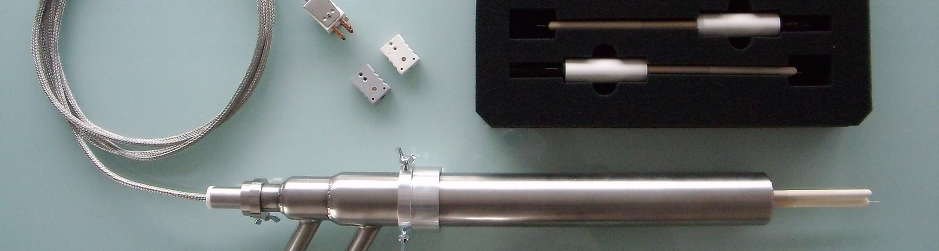
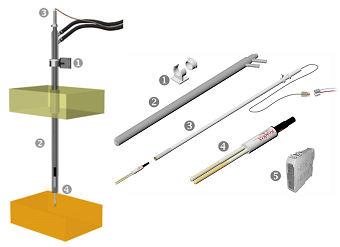
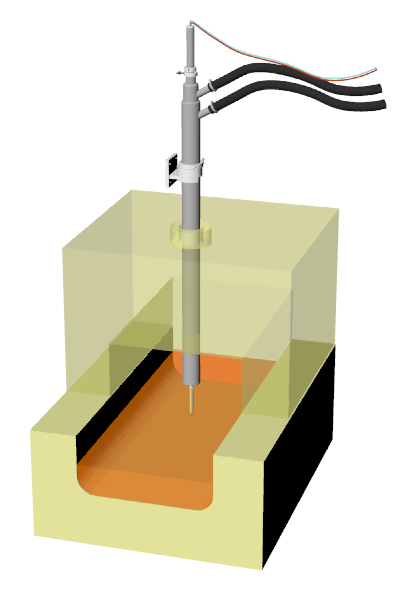
Glass Melt Redox - glas system 340x247The measuring system consists of a jacket holder unit (1), a water-cooled jacket (2), a measuring lance (3), a replaceable redox sensor (4), and an oxygen sensor interface (5). This efficient modular construction allows considerable flexibility in choosing the measurement location, making it ideal for in-line monitoring in the feeder, working end, or fore-hearth.

The sensor connects easily to the contact block on the measuring lance, while the water-cooled jacket is positioned in the furnace with its lower end just above the glass melt level. The redox sensor extends partially out of the jacket, with its measuring tip immersed in the glass melt to ensure accurate and continuous readings.

Measuring system concept

box of sensors 320x245

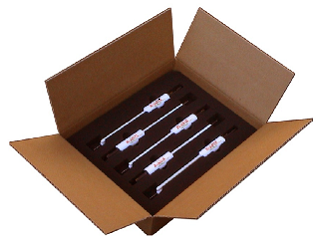
The ceramic redox sensor has a limited operational lifetime due to its partial immersion in the hot and corrosive glass melt. To accommodate this, the measuring system is designed around a concept of periodic sensor replacement after a defined usage period. Thanks to the use of a water-cooled jacket, the replaceable redox sensor remains compact and standardized in size, regardless of the measurement location. This approach enhances system flexibility and helps reduce overall costs. Sensor longevity depends on factors such as melt composition, flow dynamics, and temperature. As a reference, typical lifetime is approximately six weeks in container glass melt at 1200 °C. Sensors are available in sets of five per box:

Low investment

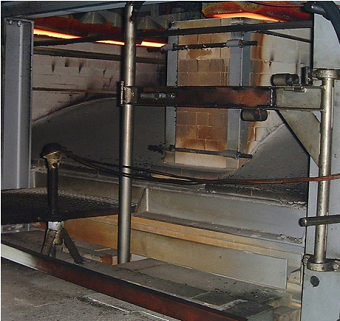
Glass Melt Redox - feeder sensor 340x320The complete measuring system offers a cost-effective solution, thanks to its straightforward design featuring a replaceable sensor. Beyond continuous redox monitoring for process control, it serves as an excellent tool for process optimization and research applications—such as during color conversions, batch composition adjustments, or increasing the share of recycled cullet. Installation is simple and can be carried out by plant personnel following the manual, making it particularly suitable for confidential production environments or experimental setups .

Glass colours

Glass sensor redox colours 550x355

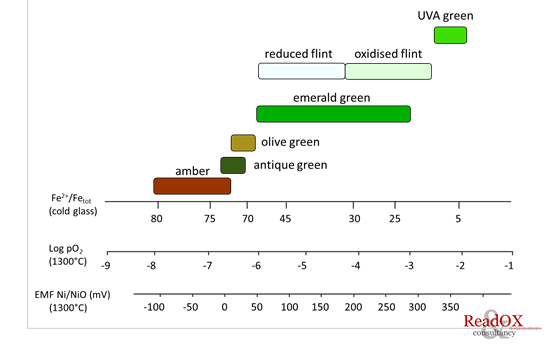
The color of the final glass product is often closely linked to the oxidation state of the melt. In commercial container glass production, colors can range from strongly reduced amber tones to highly oxidized UVA green.

Currently, the redox state of the glass is quantified using the iron ratio Fe²⁺/Fe_total. The concentrations of Fe²⁺, Fe³⁺, or total iron in the cooled glass are typically determined via spectrophotometric methods or wet chemical analysis. Since the oxygen activity in the molten glass governs the valency of multivalent ions, such as iron, a strong correlation exists between melt oxygen activity and the iron ratio in the solidified glass. A more reduced melt yields higher Fe²⁺ content, while a more oxidized melt results in increased Fe³⁺ levels.

Redox monitoring and control

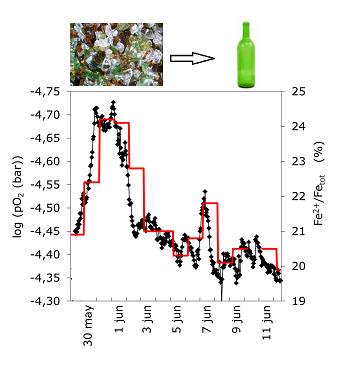
Glass Melt Redox - sensor lab analysis 340x365A strong correlation exists between the daily iron ratio analysis of the cold glass product and the log pO₂ values measured by the redox sensor in the feeder channel. The key advantage of using an in-line redox sensor over traditional daily optical checks is the continuous availability of real-time redox data, enabling significantly faster process control interventions. Furnace operators gain confidence from this continuous monitoring—particularly during nights and weekends when laboratory facilities are not readily accessible.

Container glass furnaces processing high proportions of recycled cullet often experience substantial redox fluctuations due to varying levels of organic contamination in cullet batches. With the glass melt redox sensor, polluted cullet loads can be quickly identified, allowing timely feedback to the cullet suppliers. Batch adjustments, such as sulfate or coke additions, can be implemented more rapidly than relying solely on daily spectrophotometric lab measurements. Improved redox control has tangible economic benefits: one green glass producer successfully increased the cullet share from 87% to 92%, resulting in an annual raw material cost saving of €80,000.

Heat Transfer and Redox State

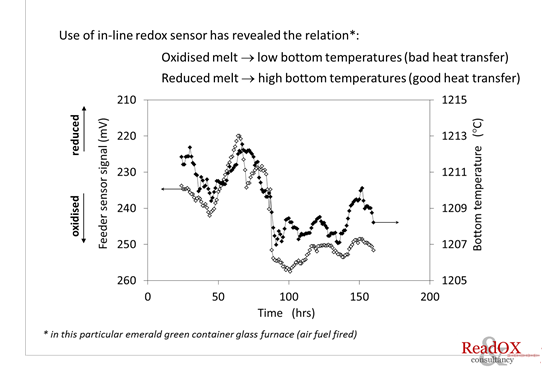
Glass sensor redox heat transfer 550x380The redox sensor provides valuable insights into the relationship between the oxidation state of the glass melt and key process and product characteristics, enhancing transparency and control for furnace operators.

A notable example is the observed correlation between bottom temperatures in the melting tank, specifically for emerald green container glass, and the redox state measured in the feeder. In-line monitoring revealed that the oxidation state of the melt influences heat transfer from burner flames into the glass. The data indicate that a more reduced melt (typical of emerald green glass) leads to higher bottom temperatures, likely due to the broad near-infrared absorption band of ferrous iron (Fe²⁺). Improved heat transfer not only lowers energy consumption but also minimizes the risk of cold bottom flows, which are associated with elevated seed counts in the final product.

Seed count and redox state

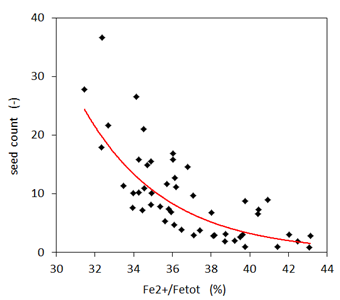
Glass Melt Redox Sensor - seed count 340x300 Seed count in emerald green glass has been shown to decrease when the glass is melted under more reduced conditions. Emerald green can be produced across a relatively wide redox range, thanks to the chemical stability of the Cr³⁺ ion, which is responsible for its characteristic color. For optimal heat transfer and a minimal seed count, emerald green is preferably melted in the reduced range. However, excessive reduction, particularly when processing high shares of recycled cullet with incidently high COD, can lead to the formation of amber cords and blisters. In such cases, precise redox control through in-line monitoring becomes essential to maintain product quality and process stability.

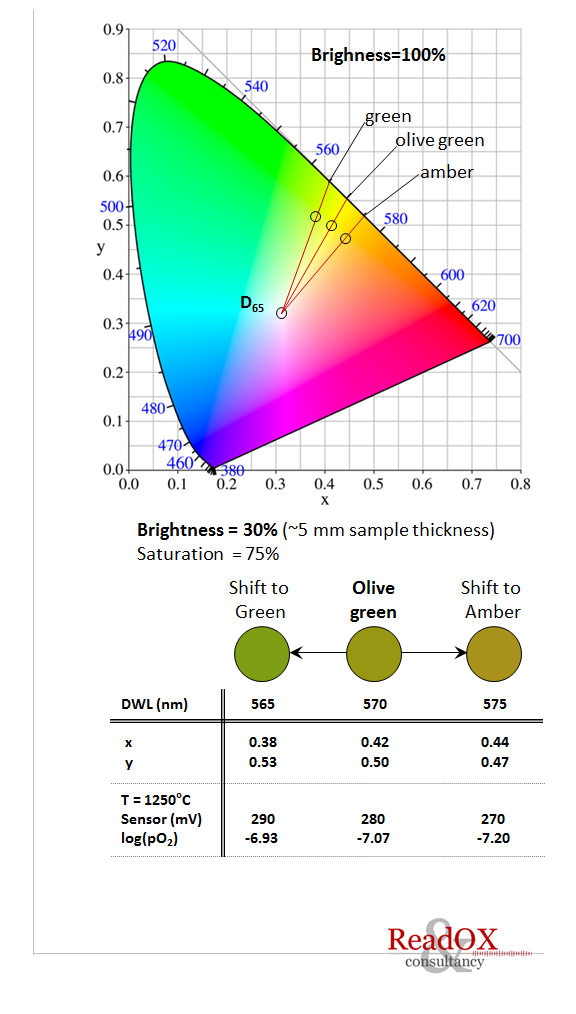
Olive and antique green

olivegreen colours 576x1014


Olive green, antique green and dark green glass colours are highly sensitive to redox fluctuations, as they result from a delicate interplay between amber and green color components. Even minor shifts in the redox state, whether toward oxidation (causing a shift into green) or reduction (causing a shift into amber), can push these colors out of specification. Small variations in pull rate, cullet weathering, or air-fuel firing ratio may trigger noticeable color instability. To maintain consistent color quality, an in-line redox sensor becomes an essential tool for the furnace operator. For these amber-green tones, the sensor’s millivolt reading must typically be held within a narrow ±5 mV range around the set point to ensure colour specifications.

Additionally, antique or dark green glass is particularly vulnerable to over-reduction. If the melt becomes excessively reduced, the amber component may vanish entirely.  This sensitivity means that both oxidation and over-reduction can diminish the amber hue leading to a green colour. Continuous monitoring the redox state  using an in-line sensor allows the operator to respond immediately by increasing or decreasing the batch redox number as needed. This real-time feedback prevents a misjudged correction in the wrong direction, resulting in even more reject.

Signal converter

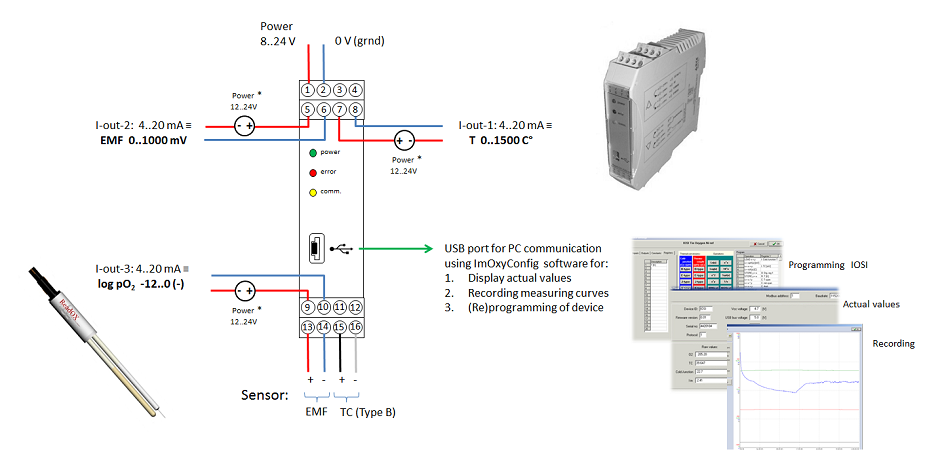
Read-Ox provides a DIN-rail mountable oxygen sensor interface (IOSI-02), a signal converter specifically developed for use with Read-Ox oxygen sensors. The glass melt redox sensor outputs two types of millivolt signals: one from the oxygen cell and another from the thermocouple. The IOSI-02 interface converts these into three analog 4–20 mA outputs, enabling seamless integration with industrial control systems. The standard output configuration is as follows:

  • I-out1: Glass melt temperature: 4-20 mA corresponds to 0 to 1500C
  • I-out2: Oxygen cell EMF: 4-20 mA corresponds to 0 to 1000 mV
  • I-out3: Log (pO2): 4-20 mA corresponds to -12 to 0 (dimensionless)

The output calculations and signal ranges of the IOSI-02 can also be customized via its USB port using the dedicated IOSI02config PC application. This software allows end users to tailor the IOSI-02 interface to their specific operational requirements, ensuring optimal integration and performance. For a comprehensive overview of the IOSI-02 oxygen sensor interface, including technical specifications and configuration options, please click IOSI-02

Recently, the I-out3 output has been reconfigured to reflect the iron ratio in the cooled glass, replacing the traditional log(pO₂) signal on I-out3. This alternative approach is currently under evaluation for its potential to improve clarity and interpretability of the in-line redox measurement for both furnace operators and lab technicians. read more...